The universal incident management skills
Under Pressure 26 June 2026

The universal incident management skills
After years working in the police it is easy to become focused on incident management from that perspective. The reality is that all businesses and organisations will face difficult situations and there are some universal principles of incident management. All this is vital to try and prevent those incidents becoming a full blown crisis. Now more than ever we should all hone and practice these skills on a regular basis.
I have spent time this week in a number of different settings and while the specifics were different the underlying approach and management had many similarities. In the same way we practice the approaches and response to a crisis, we should review how we deal with incidents particularly those challenging ones that have the potential to get worse.
So what are the key principles?
Ensure there is no ambiguity about who is in charge and where decisions are made.
Take a few minutes to really assess the problem fully so that you make the best assessment of the situation and its current or potential impact.
Halt the damage and take urgent actions before you delve into a long term solution.
Silence adds to concerns so communicate clearly and frequently so that people understand what is happening.
Work collaboratively as silos create problems where things get overlooked or people are duplicating their efforts.
Things will change throughout the lifespan of the incident so keep the actions and strategy under review.
Base your decisions in facts rather than assumptions.
Record all the decisions and actions taken so that you can improve and develop. It is also important to establish a no-blame approach to reviews so that the organisation can learn.
With the focus this week being on the resilience needed to deal with changing climate and weather conditions, we can become focused on a crisis response without recognising how we can build resilience through effective incident management. Take a moment to think about how you respond to those difficult situations and what could be improved.
Last call for Professor Lucy Easthope webinar
More than 100 people are signed up to join Amanda and the amazing Professor Lucy Easthope, a disaster recovery expert, to talk about why we continue to make the same mistakes. The session is on Monday 29 June at 6.30pm. Find out more and register to join here.

Emergency Planning Society Communication Updates
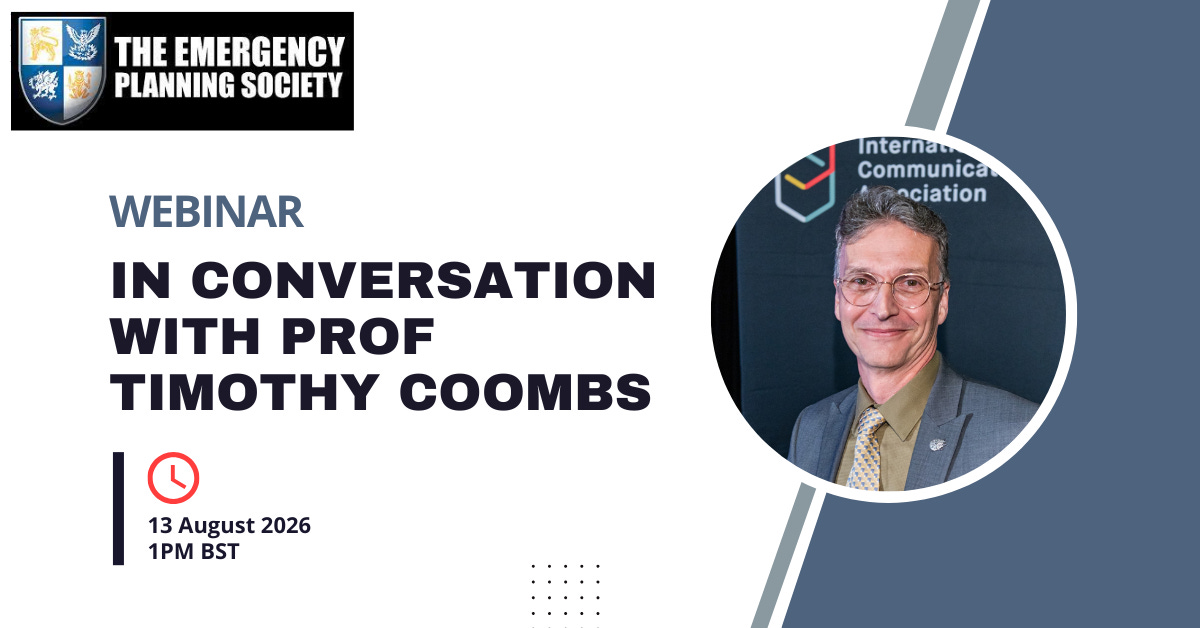
There are two exciting developments this week from the Emergency Planning Society’s Communication PWG. First was the publication of the Preparing Schools for Communicating in a Crisis guidance that was developed by group members Andy Holdsworth and Charlotte Dimond. Many thanks to them for the hard work. Read more about it here. The second was the announcement that Professor Timothy Coombs the internationally renowned crisis communication expert and academic will be joining the group for a webinar on 13 August 2026 at 1pm BST so put the date in your diary if you want to listen to the man who created Situational Crisis Communication Theory.
Digital News Report Published
This year’s Reuters Digital News Report has been published and once again it is packed with interesting information. A couple of notable points were that social media and video is more popular than TV and news websites as a source of news, and there is a growth in people experimenting with AI chatbots for news. Read more here.
In Brief:
As temperatures have soared in the UK and across Europe, Forbes ran an article on why summer is the most overlooked risk as crisis readiness ‘doesn’t take a vacation’. Read more here.
After the announcement in the UK of a social media ban for under 16s, new research from Australia raises concerns about how effective it is as an approach. Find out more here.
Residents in some Brazilian cities received an emergency alert message warning them of alien attack after the system was taken over by hackers. Read more here.
Amanda spoke with Sarah Morgan for her podcast Crisis Point looking at the human impact of crisis communication. Find out more and listen here.
EMEAA founder and vice-president Dan Stoneking explains why crisis communicators are still vital in a world of artificial intelligence. Read more here.
Social media is at the centre of brand crises according to new research conducted by Sprout Social. It is the number one place where customers and consumers hear about the brand crisis. Find out more here.
Amanda is delighted to be joining the judging panel for the Social Media Awards alongside a range of experts. Find out more here.