The same but different
Under Pressure Friday 29 May 2026

The same but different
When you receive this newsletter I will be in Amsterdam doing some training and speaking at a conference to researchers and scientists. Working in other parts of the world always makes me consider whether there are any differences in approach to crisis communication and what they may be. The answer is a yes and no.
The fundamentals of crisis communication apply across the board. In my view, and when looking at the research, there are some fundamentals that exist the world over. These include ensuring you are focused on what those affected by the crisis need and understanding how they are being negatively impacted. Ensuring there is a regular flow of information in an attempt to limit the impact of misinformation and disinformation is also universal. Then there is the need to be prepared and to have a plan that will give you the support required so that you can focus on the details of what has happened and what is needed.
The work I am doing looks at the circumstances of a number of incidents and then to review the approach. When I have been preparing and considering the situations it has been a reminder of how small the world is and how similar issues can be found from country to country.
What we always need to build into our crisis response is cultural intelligence. I have been reading Advita Patel’s new book Decoding Confidence which I absolutely recommend and will do a proper review of in a future edition of this newsletter, in it she highlights the importance of understanding people and the differences to how they view communication. It should be an important consideration in the response to crisis situations and I have covered this issue in short training sessions. Taking care to really understand what has happened, who is impacted, what we know about them and what cultural context there is, will mean a much better crisis communication response.
Because we have to move quickly to respond to emerging situations, it can often mean that we never move out of the broadcast communication we adopt in the first moments. Effective crisis communication needs to be adaptable and should change and develop throughout the response. This is where we can make a difference and move from simply telling people things to actually trying to help them understand the situation.
10 Minutes With
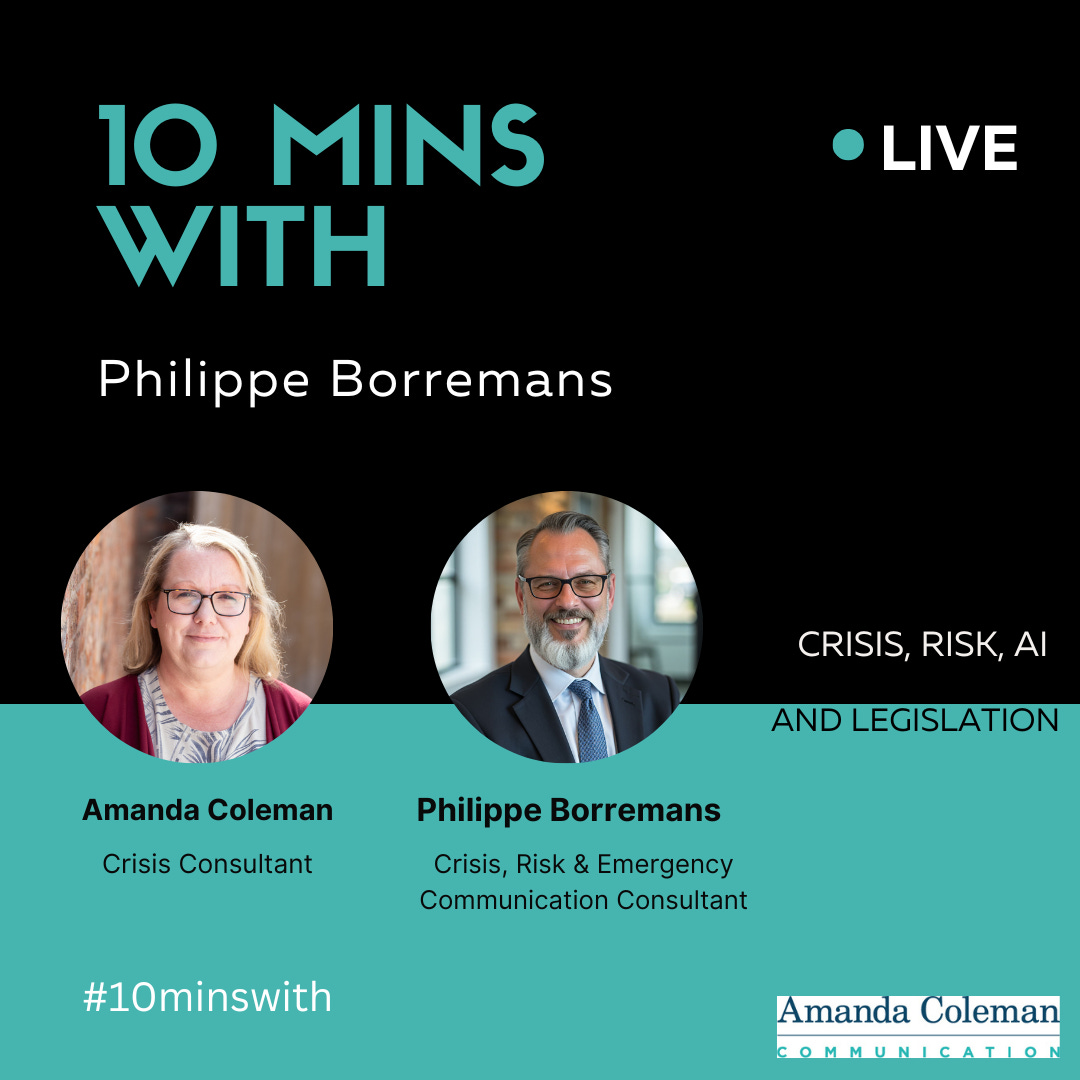
The new season continues with an interesting and enjoyable conversation with Philippe Borremans a crisis and risk specialist with extensive knowledge of artificial intelligence. Don’t miss it and watch here.
And you can find all the back editions of 10 Minutes With here.
What to say - crisis communication session
Amanda is working with Tessa Drayton to deliver a session on June 10 looking at what to say when it matters most. The crisis communication will have a focus on incidents and what to consider in response. To find out more check it out here.
In Conversation with Professor Lucy Easthope
There is still chance to book on the next session where Amanda and Professor Lucy Easthope will be talking about how we can stop making the same mistakes in managing crises. The session is on Monday 29 June at 6.30pm BST. Find out more here.

In Brief:
Professor Timothy Coombs has updated his Reexamining Crisis Communication paper to consider the recent crisis challenges. Always an important paper to read for those working in practical crisis communication. Find out more here.
The latest crisis communication monthly case study - Testing Times - will be live on Amanda’s website early next week. Find it and previous editions here.
Finland’s government have started a review of their emergency alert systems after a drone threat linked to Ukraine sparked an early warning alert that disrupted the area of Uusimaa including public services and schools. Read more here. In a further article a national guide is being considered for households on how to deal with drone incidents. Read more here.
The EU has recommended 20 changes to improve emergency preparedness after a series of consultation events with communities. Find out what it includes here.
North America is considering how to update emergency plans in light of recent research. Find out what it means here.
China has launched a nationwide emergency communication platform to ensure connectivity when disasters and emergencies happen. Find out more here.
An interesting article when considering leadership and communication in crisis from Personnel Today. People who embrace ‘corporate speak’ are worse at making workplace decisions. Read more here.
Diary Dates:
Tuesday 16 June at 9.30am Amanda is running a half day workshop to give the basics of crisis communication. Contact office@amandacolemancomms.co.uk for information.
On Thursday 18 June at 9.30am Amanda will run the half day workshop looking at Advanced Crisis Communication skills. Contact office@amandacolemancomms.co.uk for information.