Does organisational culture cloud crisis communication?
Under Pressure 7 August 2026

Does organisational culture cloud crisis communication?
The short answer for me would be yes. This came into my musings this week with the statement from FIFA about the failed sell off of the World Cup and questions over the future of President Gianni Infantino. I could feel the culture of FIFA shining through with every word and phrase, and the way they were put together.
There is a sort of half apology but more rooted in process than the principle that was being considered. They commit to review and for errors ‘not to happen again’. Then comes this interesting phrase “FIFA will no longer tolerate any attacks on its integrity, good governance and due process and will take all necessary measures to protect and safeguard its name and reputation.” Before the dreaded phase that everyone seems to use about learning lessons before pushing back to focus on the process. (You can read the statement here)
Organisations that have been through crisis will always want to move ahead and draw a line under it quickly. But that is not as easy as it may seem. There will always be questions that linger and things that need to be addressed.
When I get am discussing crisis communication plans during training I highlight the importance of understanding the organisations values and what they mean to the position the business has or wants to have and how it should influence the response. For example, if you are a business that has values about prioritising customers then this should drive the priority actions when a problem occurs. But there is a flip side to the values and culture that can impact on the effectiveness of your crisis communication and that is how this culture can create organisational deafness or a cultural ignorance.
What is acceptable within the workplace may not be acceptable to those outside of it and particularly those affected by a crisis. If there is an organisational arrogance, a belief that we know best, a failure to listen or accept challenge then this is likely to come through in what you say. So what do we need to do to avoid this pitfall?
Organisations need to be open to the challenge that comes from those outside. It needs to consider what is being said and how it will be viewed. What does it mean to others? And would you feel comfortable to say it directly to the people who were and are most affected?
Understanding culture and the impact it has on crisis communication can mean more effective communication or it can mean reinforcing negative views of the organisation. On that note, take another look at the FIFA statement and see what you think.
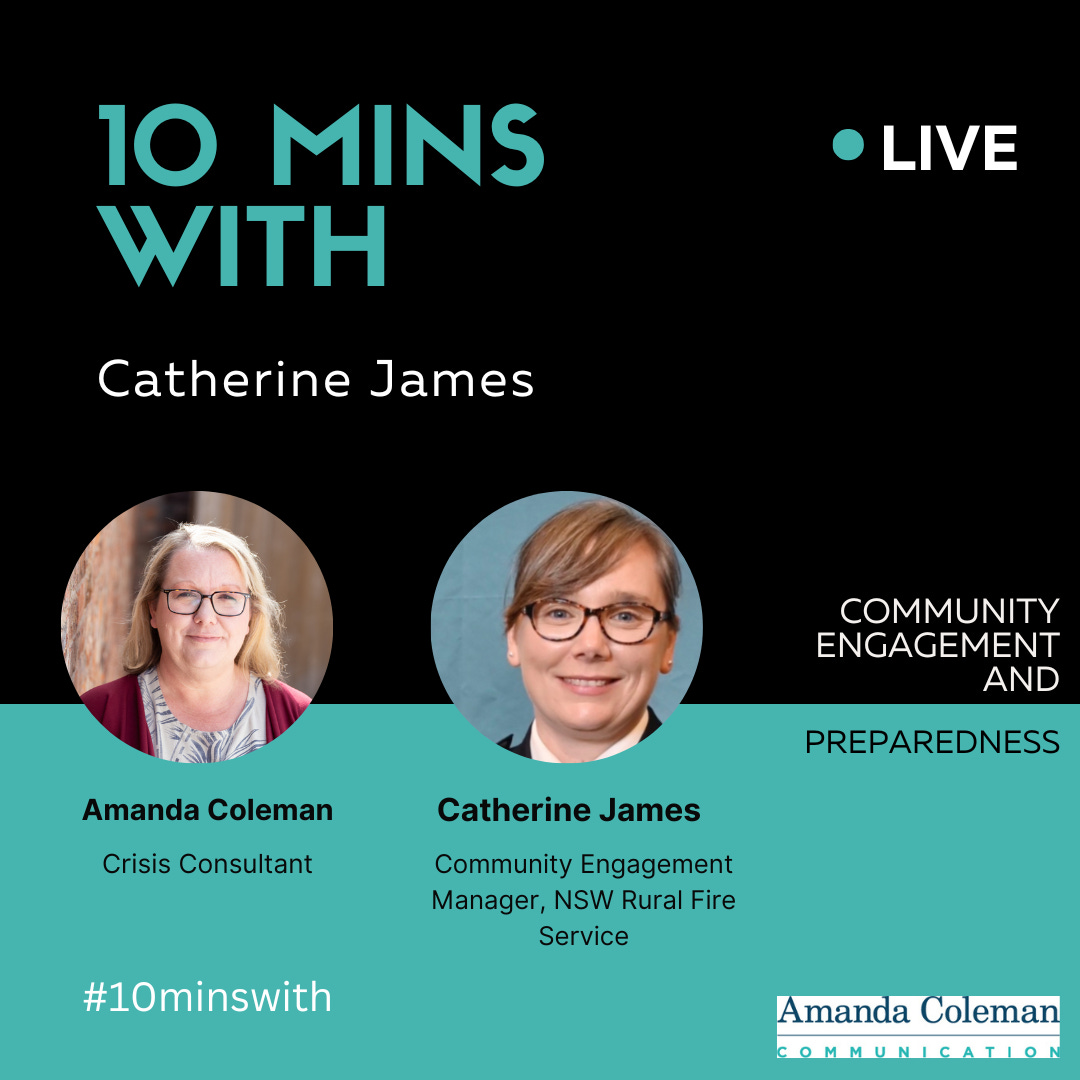
10 Minutes With considers community engagement in Australia’s Rural Fire Service
In my latest 10 Minutes With, Amanda talks with Catherine James about her work in the New South Wales Rural Fire Service building a community engagement and preparedness framework. The short conversation looks at the important work of volunteers, how the new framework was created and how it may help others.
Watch the short conversation here.
Latest Training
Amanda’s remaining training sessions for 2026 are:
20 August 14:00 Crisis Communication Exercise
24 September 14:00 Tackling Misinformation and Disinformation
15 October 14:00 Duty of Candour - Responding effectively
18 November 14:00 Disasters, Emergencies and Mass Casualty Situations
All training is online for two hours. Places are strictly limited and can be booked by contacting office@amandacolemancomms.co.uk
In Brief
There is still time to book to join the Emergency Planning Society webinar with Professor Timothy Coombs. It takes place on 13 August at 1pm and is an amazing opportunity to hear from the renowned academic. To register to attend click here.
The National Centre for Resilience in Scotland has published a report looking at trust in emergency communication against the backdrop of misinformation and disinformation. Read more about the discussion and findings here.
The United Nations University has published a paper on Misinformation, Disinformation and the Crisis of Trust in Public Institutions. It links the challenges to governance not just communication and content. Read more here.
Information about wildfires and the importance of explaining the risks is covered in an article by David Shukman former BBC news science editor and author. Read more here.
An emergency alert test in Australia found that 1 in 9 people failed to get the message and the majority had no explanation. Read more about the findings here.
The UNDRR was asking how we can avoid emergency alert fatigue? Read more about it here.
The latest crisis communication case study - Testing Times - looks at a recent incident considering why downplaying the severity can create further problems. Read the August edition and previous editions here.
Diary Dates
At 2pm on 20 August Amanda will lead a Crisis Communication Exercise session where attendees will be put through their paces with a crisis scenario. It is a great way to learn in a safe environment. For more information or to book a space email office@amandacolemancomms.co.uk
On 4 September at 10.30am, Amanda will be running a crisis management training webinar for the PRCA. Find out more about it here.